What to Wear to a Nursing Interview (7 Neat Outfits)
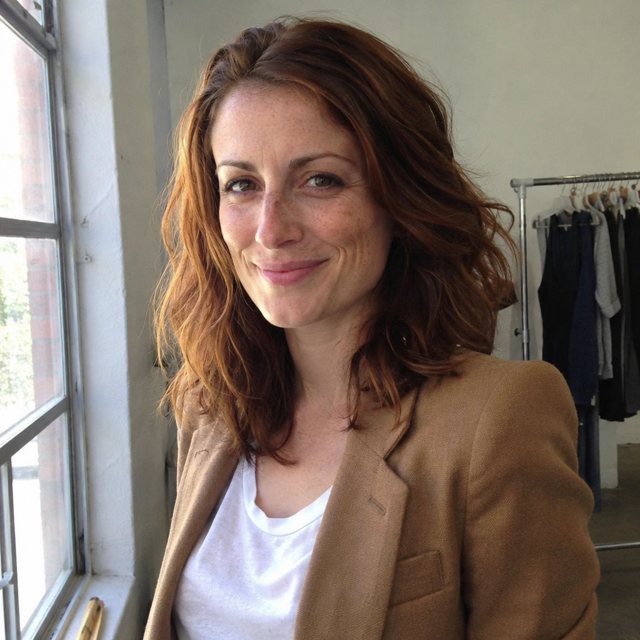
Wear a clean, tailored outfit in a quiet color: navy, black or white, with closed-toe shoes and minimal jewelry. Nursing managers are looking for someone who seems calm, careful and ready to be on her feet, so skip anything flashy or fussy. Here are seven outfits that read professional, move easily and hold up through a long interview day.
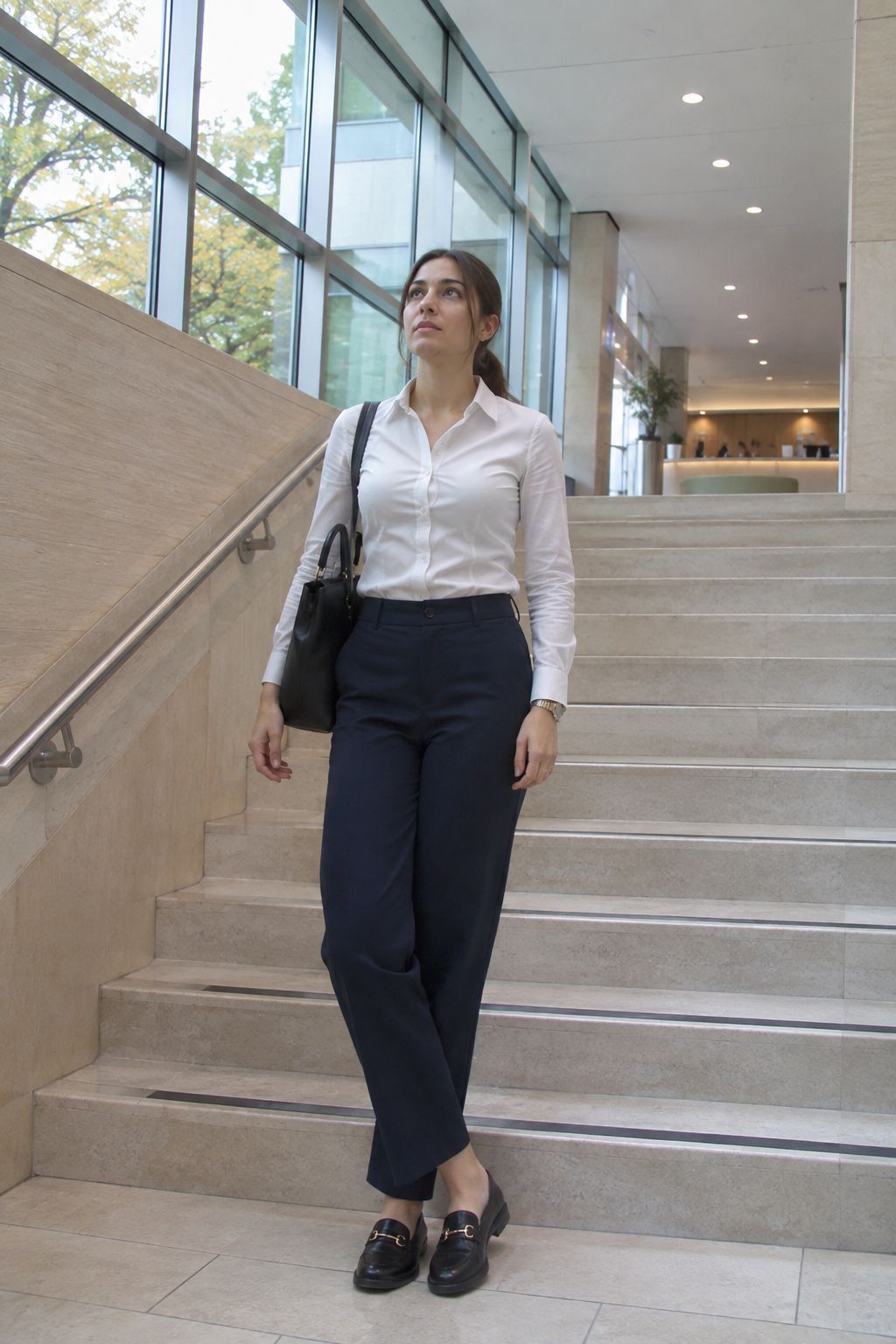
1. Navy Cigarette Pants, Crisp Top
If I had to pick one safe, smart choice for a nursing interview, it would be slim navy trousers.
These sit high on the waist and finish with a cropped cigarette leg, so they look sharp without being stiff.
Navy feels a little warmer than black, which suits a job built on patient trust. The cropped hem is practical, too.
It keeps fabric away from the floor on hospital tours, and it shows off a clean flat or low loafer. Walk-throughs of the unit are common, so a pant you can move in matters.
Wear it with: Start with a white slim long-sleeve work shirt tucked in, and add a black two-button blazer if the weather is cool. Black leather flats or low block-heel loafers finish it.
Keep your bag structured and small enough to hold a folder.
Best for: First-round interviews, unit tours, panel interviews, job fairs
Shop these pants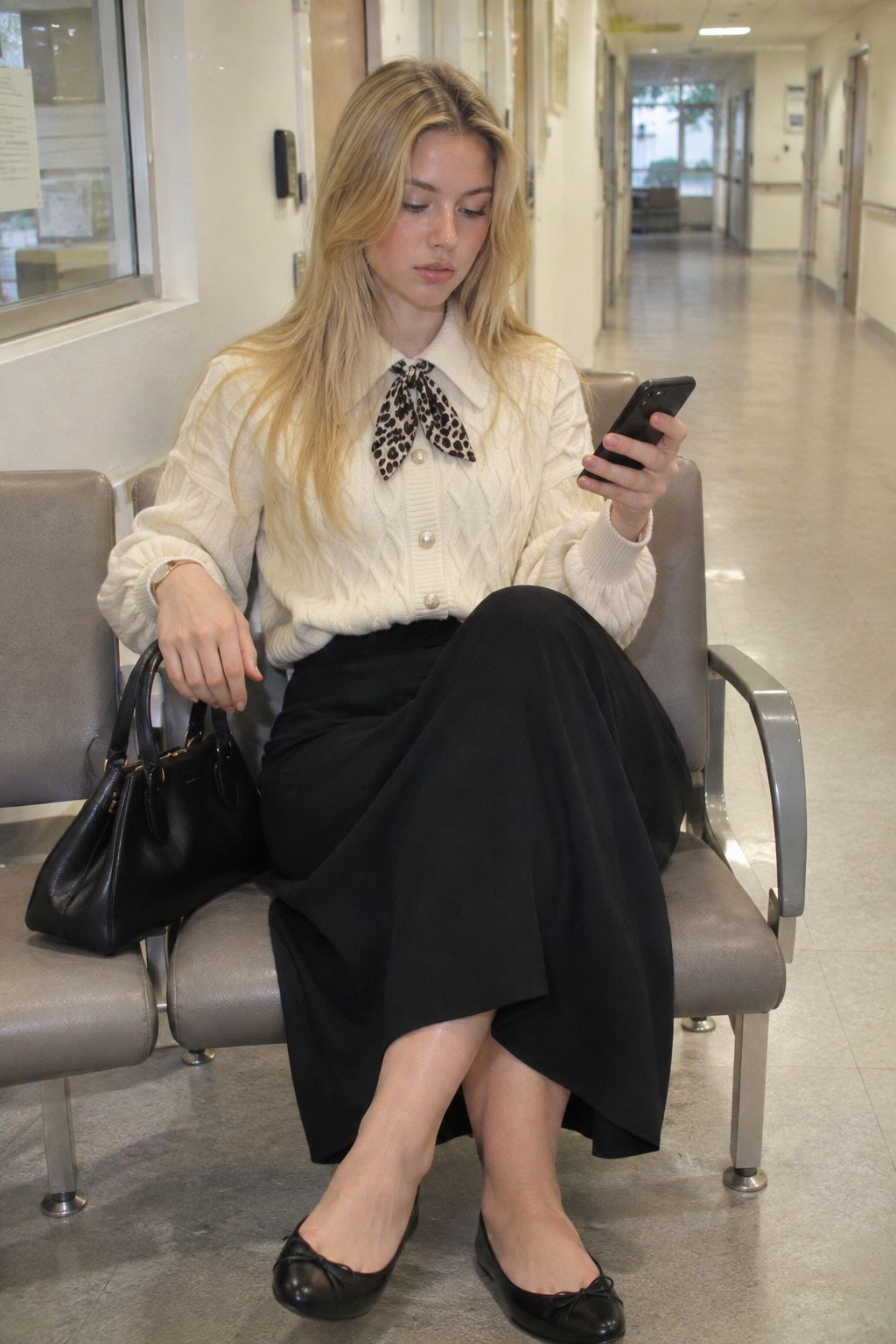
2. Knit Top and A-Line Skirt Set
A matching set takes the guesswork out of getting dressed on a nervous morning. This one pairs a white knit top with a black A-line skirt, and the contrast looks clean and deliberate.
The knit has a soft, easy feel, which is nice if you're sitting through a long panel.
The A-line shape moves well when you walk or sit, and it hides nothing you'd have to fuss over.
It leans a bit softer than trousers, which can suit pediatric, maternity or outpatient roles where warmth counts.
Wear it with: Add black flats or low pumps and sheer black or nude hosiery if you like. A beige tailored work blazer over the top gives a more formal look for a director-level interview.
Keep jewelry to small studs and a simple watch.
Best for: Pediatric or clinic interviews, panel interviews, second-round meetings
Shop this set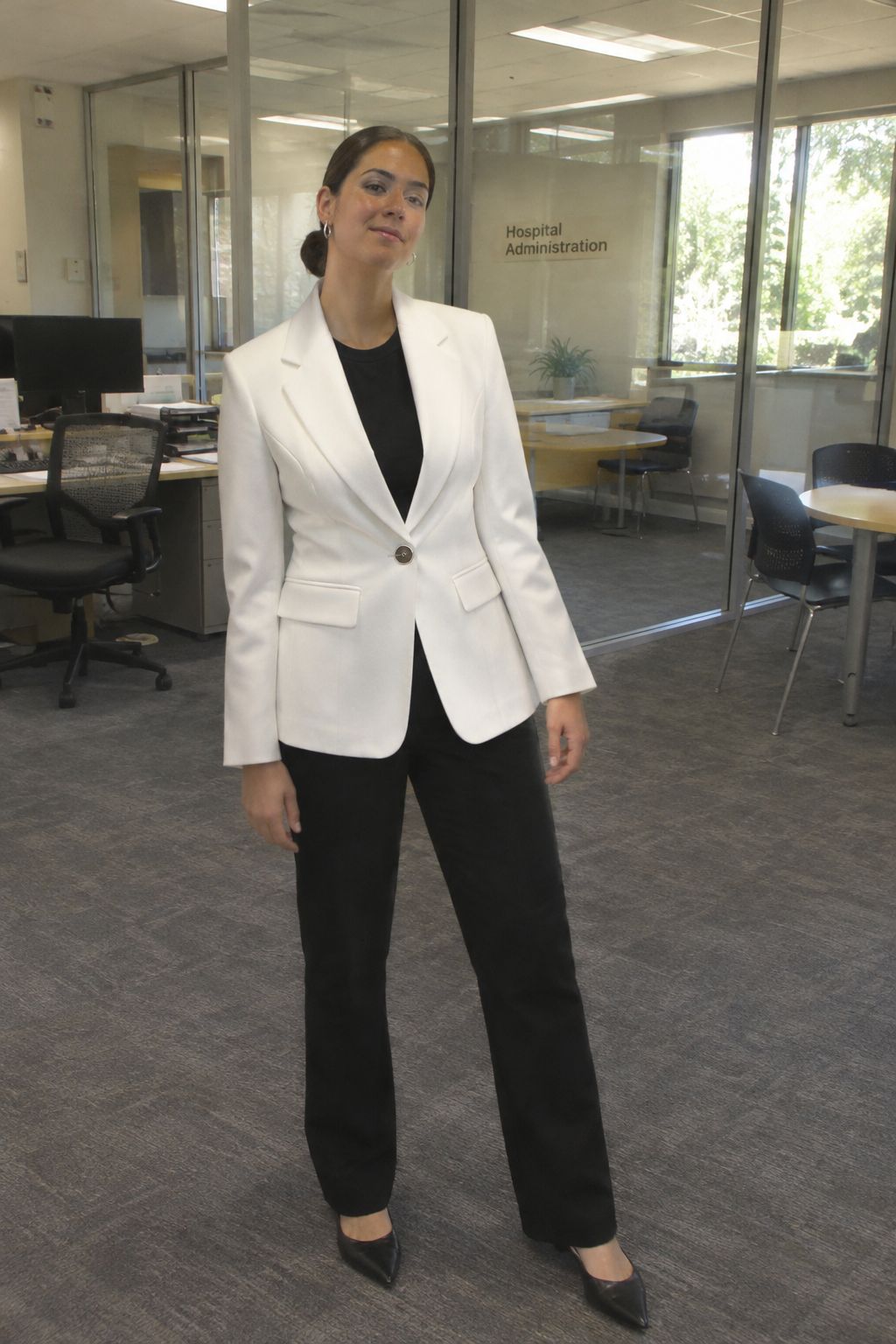
3. White Blazer, Clean and Calm
A white single-button blazer looks fresh and tidy, which is the exact message you want in healthcare.
The notched collar and one-button front keep the line long and simple, with no extra detail pulling focus. It reads confident without trying hard.
The practical note: white shows everything, so check it for lint and wrinkles before you leave. Steam it the night before and carry a small stain pen.
In return you get a jacket that makes a plain dark outfit look finished.
Wear it with: Wear it over a black scoop-neck tee or a white cotton crew neck long sleeve tee for a soft tonal look.
Pair it with navy high-waist straight trousers or black pants, and add nude or black closed-toe flats.
Best for: Hospital interviews, nurse practitioner interviews, leadership roles, career fairs
Shop this blazer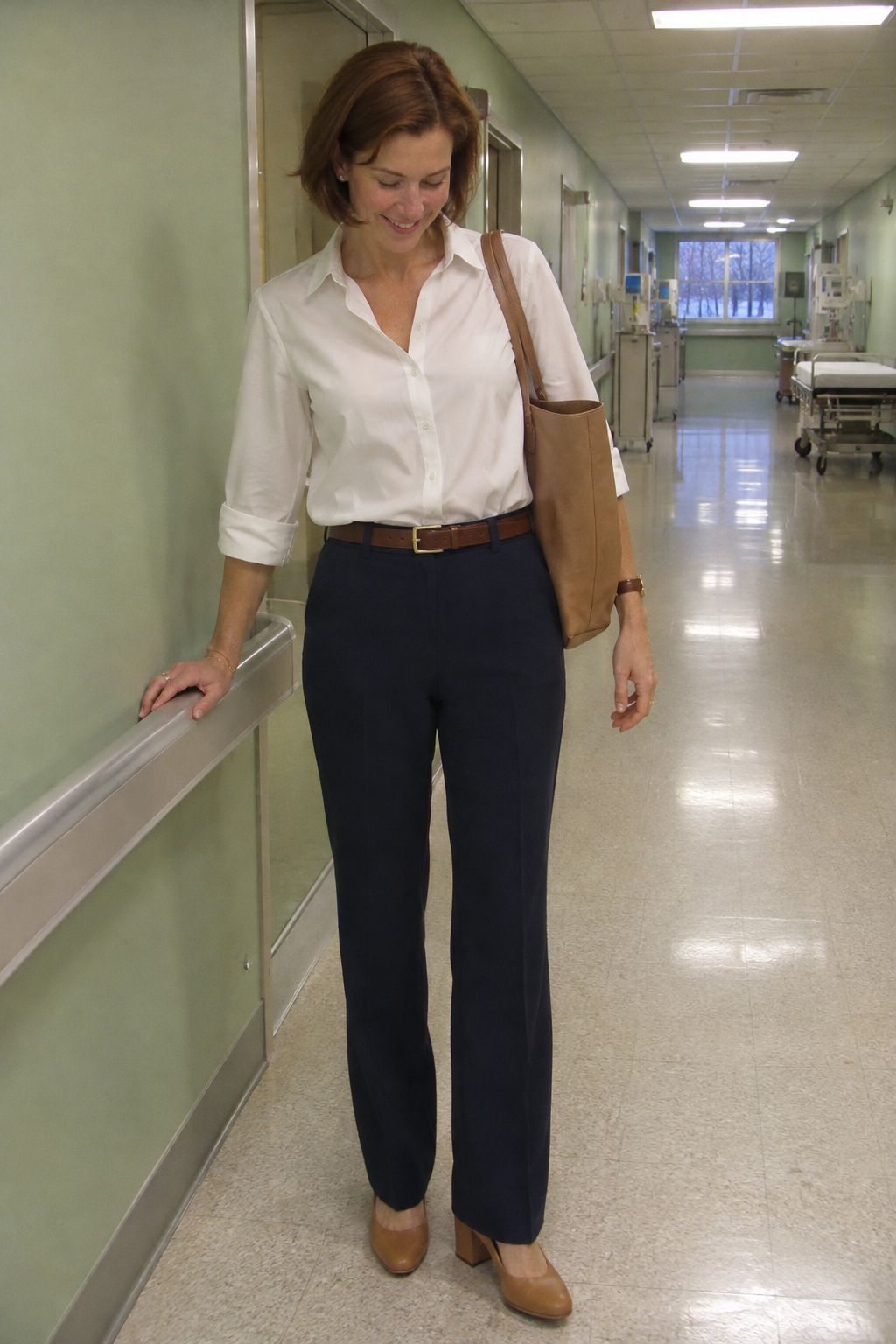
4. Straight Navy Trousers for Long Days
These are the trousers for the woman who wants a little more room.
The straight leg skims the body, the high waist stays put when you sit, and the pockets are a small luxury when you're carrying a pen and a folder.
Nursing interviews can include skills stations or a unit walk-through, so comfort counts. Navy is easy to wear with almost everything in your closet.
A pair that fits well will keep working long after you get the job.
Wear it with: Wear them with a tucked-in white hidden placket button-up shirt and low block-heel pumps or closed-toe flats. If it's chilly, layer a beige tailored work blazer on top.
Hem them to just brush the top of your shoe.
Best for: Skills assessments, unit tours, in-person interviews, long hiring days
Shop these pants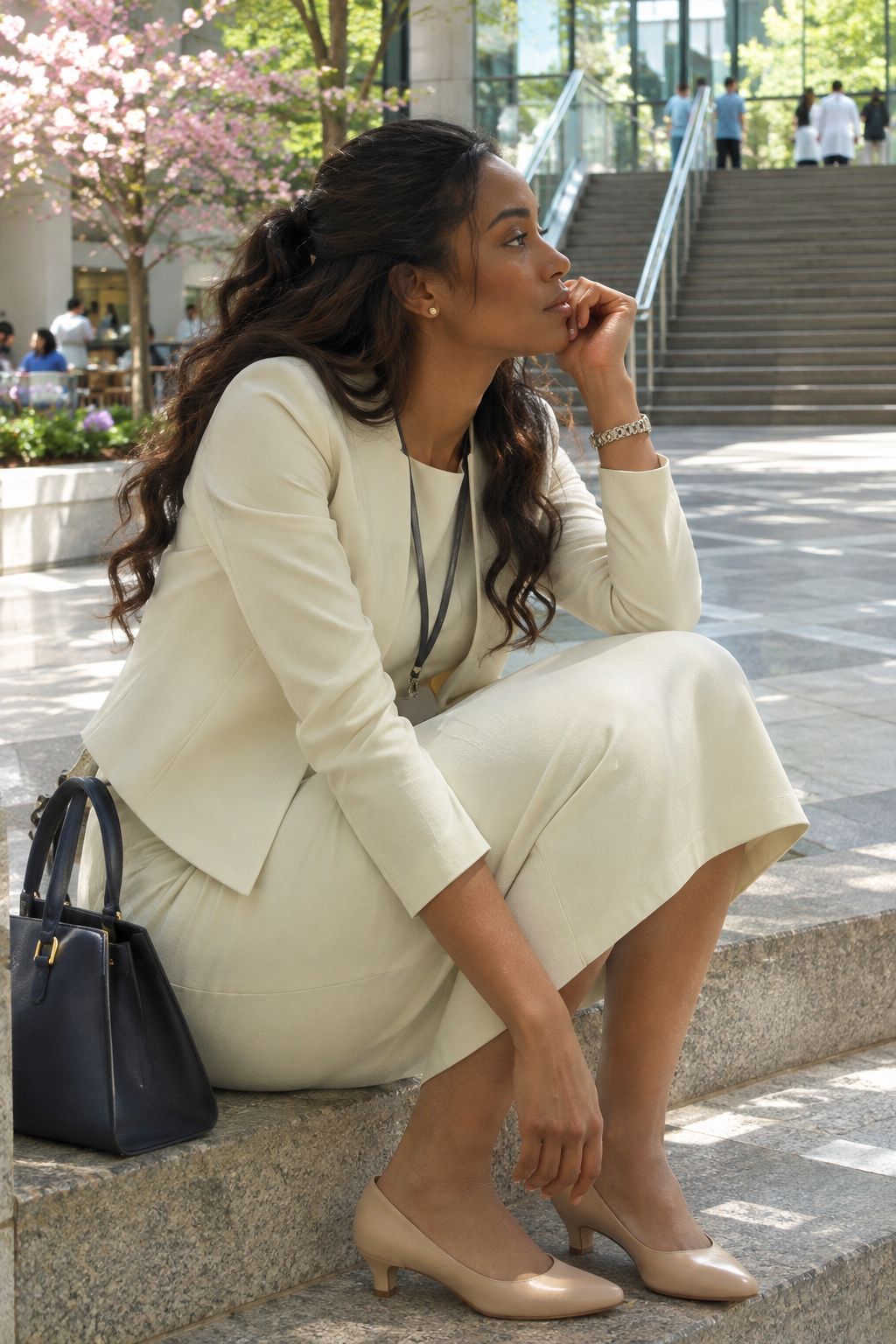
5. White Blazer and Vest Dress Set
This set is for the interview where you want a dress without wearing a plain one.
A white blazer comes with a matching vest dress, so the whole look hangs together in one clean color. It feels thoughtful and professional, and you can wear the pieces apart later.
The vest-dress cut is easy to move in and not too tight across the shoulders, which helps if you'll be asked to demonstrate something hands-on.
Keep hem length near the knee for a conservative finish.
Wear it with: Add a thin white slim long-sleeve work shirt under the vest for more coverage, or wear a fitted black tee if you want contrast. Choose nude or black low pumps and sheer hosiery.
A navy structured bag keeps the palette crisp.
Best for: Nurse manager interviews, hospital panel interviews, graduate nurse programs, formal meetings
Shop this set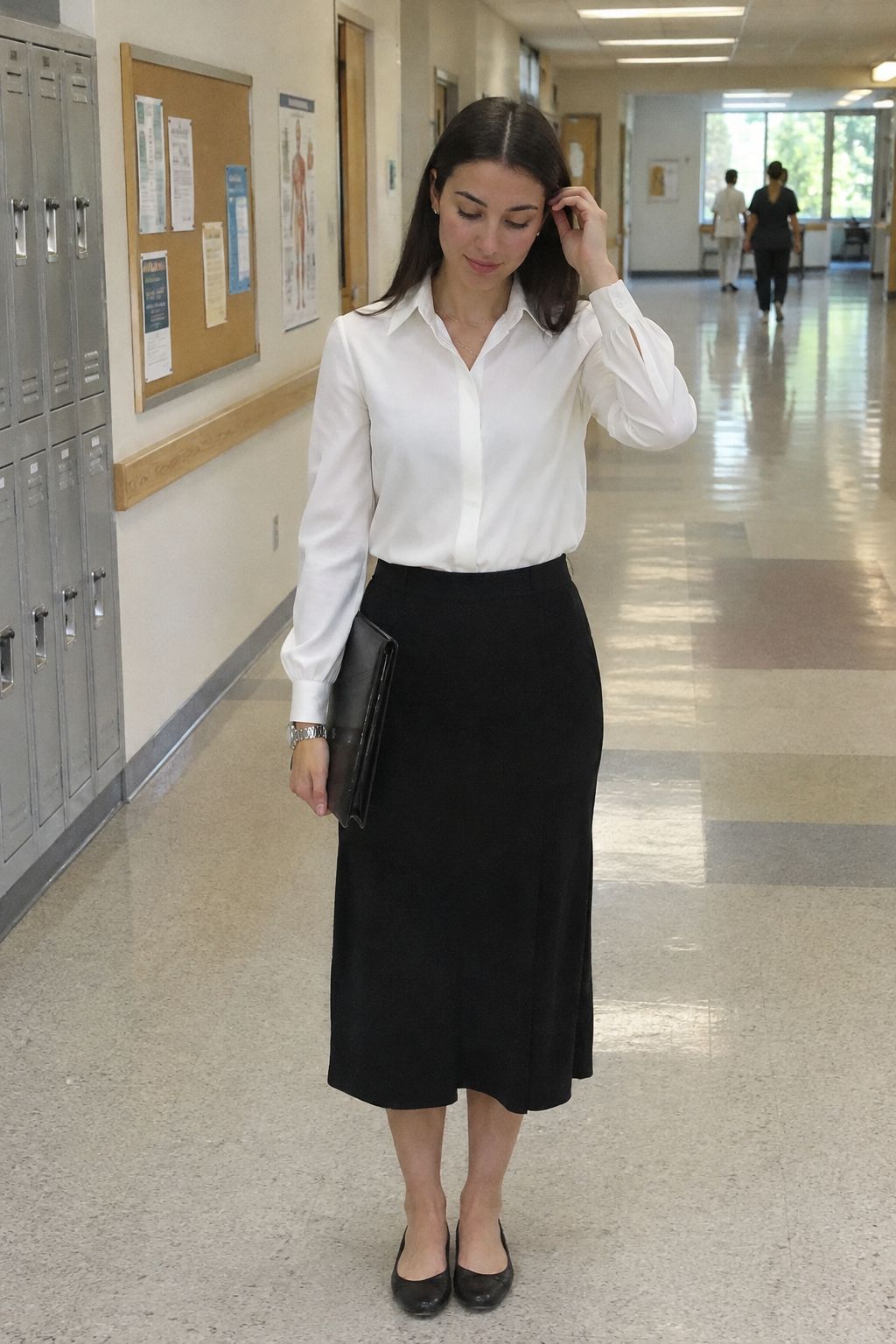
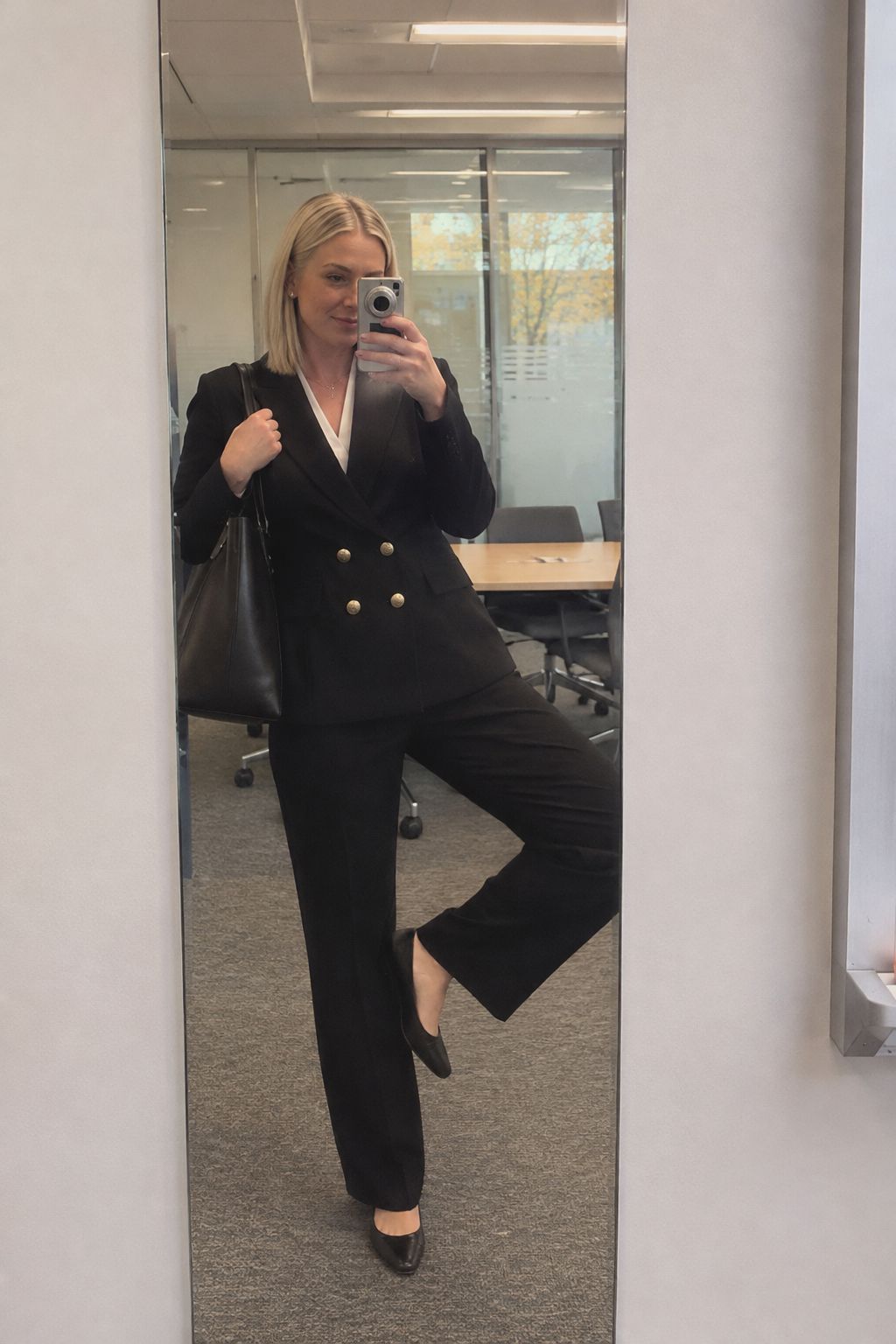
7. Black Slim-Fit Blazer Set
When the job is competitive and you want to look unmistakably prepared, a black slim-fit blazer set does the work.
It's cut close to the body, so the shoulders look neat and nothing swings around when you shake hands. The matching pieces give you a finished look with no styling effort.
Black is serious without being cold. Brighten it with a white top underneath so you look approachable. This suits leadership, ICU, ER and other roles where authority and calm count.
Wear it with: Wear it with a white hidden placket button-up shirt or a fitted white tee.
Black closed-toe flats or low pumps work well, and a white cotton crew neck long sleeve tee is a softer option under the jacket. Keep jewelry small.
Best for: ICU and ER interviews, leadership interviews, panel interviews, final rounds
Shop this setA Few Last Checks Before You Walk In
Fit and comfort matter as much as the outfit itself.
Try everything on a few days ahead, sit down in it, reach overhead and walk up a flight of stairs.
If anything pulls, gaps or rides up, change it. You want to forget your clothes the moment the interview starts.
Keep the details quiet: closed-toe shoes you can stand in, short clean nails, hair away from your face, light fragrance or none at all.
Hospitals have scent policies, and a clean, neutral finish reads as careful.
Bring a folder with copies of your resume and license, and carry one small bag instead of several.
Arrive ten minutes early, and keep a spare pair of hosiery and a lint roller in the car. A calm morning shows in how you sit and speak.
FAQ
What color should I wear to a nursing interview?
Navy, black, white and soft neutrals are the safest. They look professional and calm, and they don't distract from what you say. Add a little color with a scarf or a simple top if you like, but keep it muted.
Should I wear a suit to a nursing interview?
A suit or a blazer with matching pants or skirt is a good choice, especially for hospital and leadership roles. If the setting is a small clinic, a blazer with tailored trousers or a skirt is plenty. When unsure, dress one step above the workplace.
Can I wear scrubs to a nursing interview?
Usually no. Unless the employer tells you otherwise, wear business attire. Scrubs can suggest you didn't prepare, even though you'll wear them on the job.
Is a skirt or pants better for a nursing interview?
Both work. Choose what you feel most comfortable and confident in. Tailored trousers are practical for unit tours, while a knee-length A-line skirt looks neat and professional.
What shoes should I wear to a nursing interview?
Closed-toe, low-heeled or flat shoes in black, navy or nude. You may walk through the unit, so pick something you can stand in comfortably. Make sure they're clean and polished.
Can I wear jewelry and perfume to a nursing interview?
Keep jewelry small: studs, a simple watch, maybe a thin necklace. Skip perfume or wear very little, since many hospitals discourage strong scents. A clean, neutral look is best.
How should I style my hair and nails for a nursing interview?
Pull long hair back neatly so it stays off your face. Keep nails short, clean and in a natural or sheer polish. It signals that you understand the standards of clinical work.
What should I bring to a nursing interview?
Bring copies of your resume, license and references in a neat folder, plus a pen and a small notebook. One structured bag is enough. Having these ready shows you're organized.
More style guides
- How to Dress for a Job Interview (10 Tips)
- What to Wear to a Professional Interview (7 Sharp Looks)
- 8 Interview Outfits for Women That Look Confident
- What to Wear to a Business Interview (8 Sharp Looks)
- 7 Casual Interview Outfits for Women That Impress
- How to Dress for Jury Duty (10 Ways)
- 7 Teacher Outfit Ideas for Comfy Classroom Days
- 9 Office Outfits for Women That Look Sharp
- What to Wear to Church as a Woman (7 Modest Looks)
- 8 Church Outfits for Women That Feel Graceful